


Fair Shine industrial (Hong Kong) Co., Limited
To provide customers with the most comprehensive precision mold parts solutions.

2025-11-12 14:37:08
As a core process in the machinery manufacturing industry, precision Sheet Metal Fabrication is widely used in high-end manufacturing sectors such as aerospace, electronic equipment, medical devices, and automotive industries, thanks to its high precision and stability. It processes metal sheets with a thickness of no More than 6mm, transforming flat sheets into three-dimensional structural components with specific functions through a series of standardized and refined procedures. The entire process revolves around "precision," with every step from design to inspection directly impacting the quality and performance of the final product.
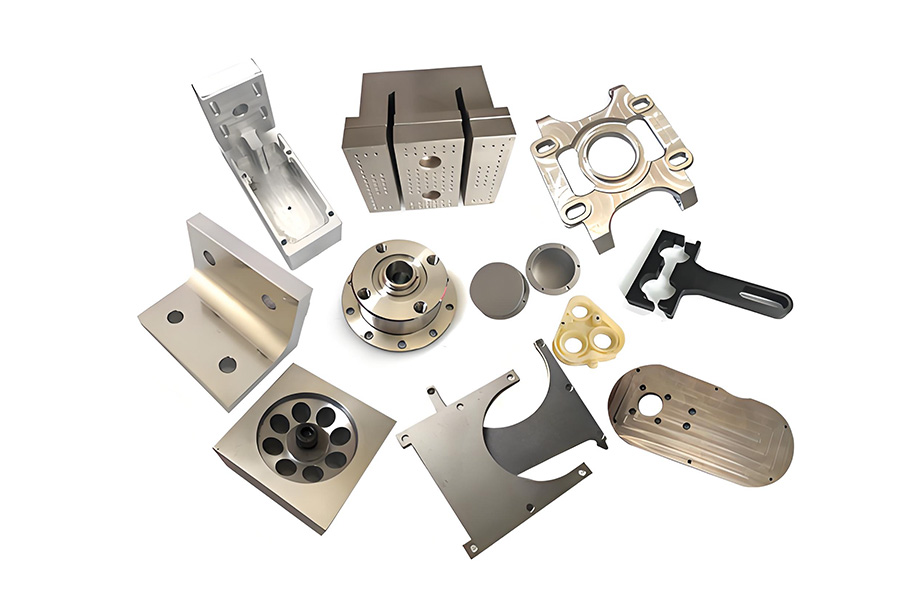
Design and programming mark the starting point of precision Sheet Metal Fabrication and lay the foundation for the accurate progression of subsequent processes. First, engineers use CAD (Computer-Aided Design) software to create 3D models and 2D engineering drawings based on the product’s application scenarios, functional requirements, and assembly specifications. Key parameters such as sheet material, thickness, dimensional tolerances, and bending angles are clearly defined. Considering the uniqueness of sheet metal processing, the design phase must also account for process feasibility—for example, reserving bending allowances, avoiding sharp corner designs, and arranging hole positions properly to prevent sheet cracking or dimensional deviations during processing.
Once the drawings are confirmed, technicians import CAD files into CAM (Computer-Aided Manufacturing) software to convert them into CNC (Computer Numerical Control) machining codes. Parameters such as cutting paths, bending sequences, and stamping force are set through programming, while simulating the machining process to identify potential interference issues and ensure program accuracy. This step is akin to planning a "route" for processing equipment, serving as the core prerequisite for achieving precision fabrication.
The core goal of cutting and blanking is to accurately separate the required shape of blanks from the entire metal sheet while ensuring smooth cuts and dimensional errors are controlled at the micrometer level. Current mainstream cutting methods include laser cutting, CNC punching, and plasma cutting. Among these, laser cutting is preferred for precision Sheet Metal Fabrication due to its high accuracy, speed, and smooth cutting edges.
Laser cutting uses a high-energy-density laser beam focused on the sheet surface to instantly melt or vaporize the metal. Combined with precise control by the CNC system, it enables efficient cutting of complex shapes with low edge roughness, meeting assembly requirements without subsequent grinding. For mass-produced parts with simple shapes, CNC punching is more cost-effective, using dies for rapid stamping and blanking to balance efficiency and precision. After blanking, workers conduct initial inspections to reject non-conforming blanks with out-of-tolerance dimensions or burrs, ensuring only qualified materials enter the next process.
Bending and forming are critical processes that transform flat blanks into three-dimensional structures. The core is to apply pressure to the blank using a bending machine, causing it to bend along a preset line to the target angle. This process not only requires precise angles but also controls the sheet’s springback—metals exhibit slight elastic rebound after bending. Technicians must reserve springback compensation in programming based on the elastic modulus of materials (such as stainless steel, aluminum alloys, and cold-rolled sheets) to ensure the final angle meets drawing specifications.
The CNC system of the bending machine precisely controls bending speed, pressure, and sequence. For parts with complex structures, bending is performed step-by-step following the principle of "inside first, outside later; small first, large later" to avoid interference with already formed structures in subsequent processes. During bending, workers use angle rulers, calipers, and other tools for real-time inspection, adjusting parameters promptly to ensure each bending position meets tolerance standards.
For sheet metal parts requiring complex structures such as holes, flanges, or stretches, further processing through stamping and forming is necessary. This process uses punch presses or CNC punch presses with specialized dies to perform operations like punching, blanking, flanging, stretching, and riveting, enhancing part functionality while ensuring structural stability.
For example, heat dissipation holes in electronic device enclosures are processed via punching, with hole diameters and spacing strictly following design requirements to ensure heat dissipation efficiency. Threaded holes for connections are installed with rivet nuts through riveting to enhance connection strength. For special structures like arcs or curved surfaces, the sheet is gradually stretched into shape using stretching dies, with controlled stretching speed and pressure to prevent wrinkling or cracking. Stamping and forming place high demands on die precision and equipment stability—die wear or fluctuations in equipment parameters directly affect part quality, requiring regular die maintenance and equipment calibration.
When a single sheet metal part cannot meet product functionality, welding and assembly are used to join multiple parts into a complete functional unit. Common welding methods in precision sheet metal fabrication include TIG welding, spot welding, and laser welding, each suited to different scenarios: TIG welding produces aesthetically pleasing, high-strength welds, ideal for parts with high appearance requirements; spot welding offers high efficiency and minimal deformation, suitable for thin-sheet joining; laser welding features a small heat-affected zone and high precision, making it ideal for high-precision, thin-walled parts.
During welding, parameters such as current, voltage, and welding speed are strictly controlled to avoid issues like cold welding, missing welds, or excessive weld seams. To reduce welding deformation, techniques such as symmetric welding and segmented welding are adopted, with fixtures used to secure part positions. After welding, welds are ground to remove slag and burrs, ensuring a smooth surface, while non-destructive testing is performed to detect internal welding defects and verify weld strength meets operational requirements.
Surface treatment is the "finishing touch" of precision sheet metal fabrication, enhancing not only the part’s aesthetic appeal but also its corrosion and wear resistance, extending service life. Common surface treatments include painting, electroplating, brushing, and anodizing: Painting is suitable for enclosure parts requiring specific colors, effectively isolating air and moisture; Electroplating (e.g., galvanizing, chrome plating) improves surface hardness and corrosion resistance; Brushing creates a fine metallic luster, often used for high-end equipment enclosures; Anodizing is applied to aluminum alloy parts, forming an oxide film that provides both protection and decoration.
After surface treatment, the final inspection phase begins. Inspection covers dimensional accuracy, appearance quality, and functional performance: Precision instruments such as coordinate measuring machines and projectors are used to verify critical dimensions against tolerance requirements; Visual inspections check for scratches, color differences, or coating peeling; Functional tests are conducted on assembled products to confirm they meet operational needs. All qualified products are packaged and stored, while non-conforming items are repaired or scrapped based on defects, ensuring 100% quality for customer delivery.
From design and programming to final inspection, each step in precision sheet metal fabrication is closely linked and interdependent, embodying the core concept of "precision manufacturing." With technological advancements, continuous upgrades in laser cutting, CNC bending, automated welding, and other technologies have steadily improved the precision and efficiency of precision sheet metal fabrication, providing solid support for the development of high-end manufacturing and establishing it as an indispensable process in modern industrial production.

Fair Shine industrial (Hong Kong) Co., Limited
To provide customers with the most comprehensive precision mold parts solutions.
+86 189 2682 6341
Block 1, No. 12, Wusong 4th Street, Yuwu Industrial Zone, Dongcheng District, Dongguan, Guangdong, China
Copyright © 2026 Dongguan Huixiang Mold Technology Co., Ltd all rights reservrd.
Technical support: HuaShang