


Fair Shine industrial (Hong Kong) Co., Limited
To provide customers with the most comprehensive precision mold parts solutions.

2025-11-21 13:59:40
Laser Cutting is a precision thermal cutting technology that leverages a high-power, focused laser beam to melt, vaporize, or blow away material, resulting in clean, accurate cuts across various workpieces. As a cornerstone of modern manufacturing, it has gradually replaced traditional cutting methods like mechanical shearing and Plasma Cutting in numerous industries, thanks to its versatility, speed, and precision. Below is a detailed narrative of the Laser Cutting process.
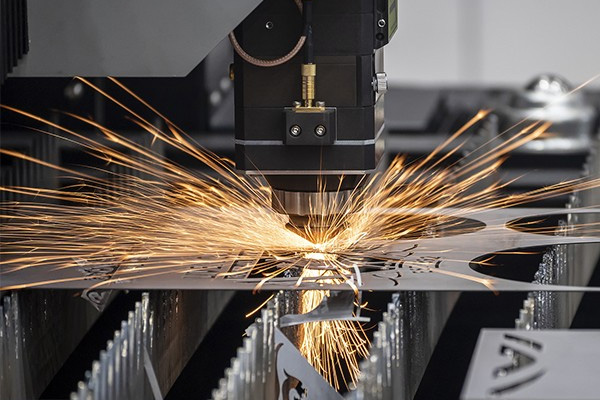
At its essence, laser cutting relies on three key physical phenomena driven by a concentrated laser beam. First, a laser source—such as CO₂ or fiber laser—generates a monochromatic (single-wavelength), coherent (aligned waves), and collimated (narrow, non-diverging) beam of light. This beam is then amplified to achieve high energy density, typically ranging from 10⁶ to 10⁹ W/cm². Next, the laser beam passes through a lens or mirror system to focus into an extremely small spot, usually 0.1–0.3 mm in diameter. This concentration of energy raises the material’s temperature to its melting or vaporization point in microseconds. The final step is material removal: for non-metals like wood and plastic, the laser directly vaporizes or decomposes the material; for metals such as steel and aluminum, the laser melts the material, and a coaxial assist gas (like oxygen or nitrogen) blows away the molten slag to form a clean cut.
A standard laser cutting machine comprises five critical parts. The laser source is responsible for generating the laser beam—CO₂ lasers are suitable for both non-metals and metals, while fiber lasers are preferred for metal cutting. The beam delivery system, consisting of lenses, mirrors, and fiber optics, transmits and focuses the laser beam onto the workpiece. The assist gas system supplies specific gases: oxygen for oxidation cutting and nitrogen for clean, slag-free cuts, both of which help remove debris. The CNC control system automates the cutting path by interpreting computer-aided design (CAD) files converted into G-code, the language of CNC machines. Finally, the worktable secures the workpiece, which can be fixed or movable depending on the machine type.
Laser cutting is categorized by its material removal mechanism and the assist gas used, with three common types dominating industrial applications.
Fusion cutting, often nitrogen-assisted, involves the laser melting materials like stainless steel and aluminum without oxidizing them. High-pressure nitrogen, an inert gas, blows away the molten metal, leaving a smooth, oxide-free edge. This method requires no post-processing and is ideal for materials sensitive to oxidation, such as medical devices, automotive parts, and precision metal components.
Flame cutting, or oxygen-assisted cutting, uses oxygen as both an assist gas and a reactant. The laser heats the material to its ignition temperature, and oxygen oxidizes (burns) the metal, producing additional heat to melt More material. The molten oxide slag is then blown away. This process offers faster cutting speeds for thick carbon steel (up to 200 mm) and lower energy consumption, making it suitable for heavy machinery, structural steel, and shipbuilding. However, it leaves a thin oxide layer that may require post-cleaning and is not compatible with stainless steel or aluminum.
Vaporization cutting relies on the laser’s intense energy to directly vaporize materials like wood, acrylic, and thin metals without melting them. No assist gas is necessary, though air may be used for minor debris removal. This method delivers extremely precise cuts with minimal material waste, making it ideal for acrylic signage, wood crafts, and thin metal foils. However, it is slow for thick materials and consumes high levels of energy.
The laser cutting process follows a structured workflow to ensure accuracy and efficiency. First, a 2D or 3D design is created in CAD software such as AutoCAD or SolidWorks, then exported as G-code for the CNC system to interpret the cutting path. Next, the workpiece is prepared by cleaning off dust, oil, or coatings, and secured to the worktable using clamps or a vacuum system. The machine is then set up: selecting the appropriate laser type (e.g., fiber for steel), adjusting beam focus, setting cutting speed and power, and choosing the correct assist gas (nitrogen for stainless steel, oxygen for carbon steel). A test run—without laser activation—is performed to verify that the cutting path aligns with the workpiece. Once confirmed, the cutting execution begins: the CNC system guides the laser head (or workpiece) along the programmed path, melting or vaporizing the material while the assist gas blows away debris. Finally, post-processing involves removing the cut part; for flame-cut metals, oxide layers are cleaned with grinding, and for non-metals, edges may be sanded if needed—though most laser cuts are already smooth enough to require no additional work.
Laser cutting is highly versatile and works with almost any material, though performance varies by type. For metals, carbon steel, stainless steel, aluminum, copper, and brass are commonly processed—fiber lasers are preferred for high-reflectivity metals like aluminum and copper. Non-metals such as acrylic, wood, plywood, cardboard, fabric, leather, and plastics (e.g., ABS, PVC) are also compatible, though PVC releases toxic fumes, requiring proper ventilation. Other materials, including thin glass sheets, thin stone slabs (for engraving or cutting), and ceramics (with specialized lasers), can also be processed with laser cutting.
Laser cutting offers numerous advantages over traditional cutting methods. Its precision is unmatched, with tolerances as tight as ±0.01 mm, making it ideal for intricate designs like lace patterns and micro-components. It is also faster than mechanical cutting for thin-to-medium materials—for example, 10 times faster than plasma cutting for 1mm stainless steel. Versatility is another key benefit: it can cut complex shapes, holes, and contours without custom tooling, as only the CAD file needs to be updated. Laser cuts are clean, with minimal burrs and no material deformation due to the low heat-affected zone (HAZ), reducing the need for post-processing. The process is easily automated, integrating with CNC systems and robotics for high-volume production while minimizing human error. Additionally, the narrow kerf (cut width, 0.1–0.5 mm) ensures material efficiency by reducing waste.
Despite its advantages, laser cutting has certain limitations and considerations. The initial investment in laser cutting machines is higher than traditional tools, with fiber lasers ranging from $50k to $500k+. There are also thickness limits: for metals, practical cutting thickness is up to approximately 50 mm with fiber lasers or 200 mm with CO₂ flame cutting, and thicker materials result in slower cutting speeds and reduced precision. High-reflectivity metals like aluminum and copper can reflect the laser beam, potentially damaging the machine, which requires specialized fiber lasers and safety measures. Safety hazards are another concern: laser radiation can cause eye damage, and fumes from materials like PVC and metals are toxic, necessitating proper ventilation, safety goggles, and enclosed workspaces.
Laser cutting is widely used across various industries. In the automotive sector, it is used to cut body panels, exhaust components, and precision engine parts. The aerospace industry relies on it for fabricating lightweight aluminum and titanium parts (e.g., wing ribs, fuselage components) with tight tolerances. In electronics, it cuts circuit boards (PCB), metal foils, and plastic casings. The signage and advertising industry uses laser cutting for acrylic letters, wood engravings, and fabric banners. The medical field benefits from its precision for producing surgical instruments, implantable components, and microfluidic devices. Finally, the construction industry uses laser cutting for structural steel, decorative metal panels, and piping.
Laser cutting technology continues to evolve, with several key trends shaping its future. Fiber laser dominance is on the rise, as fiber lasers replace CO₂ lasers for metal cutting due to higher efficiency (50% compared to 10–15% for CO₂) and lower maintenance costs. High-power lasers, ranging from 10–30 kW, enable faster cutting of thick metals up to 100 mm. 3D laser cutting is becoming more prevalent for complex 3D workpieces like automotive frames, with 5-axis laser cutting machines that tilt and rotate the laser head for enhanced flexibility. Hybrid systems that combine laser cutting with 3D printing are emerging for prototyping and production. Additionally, AI-powered optimization is gaining traction, with AI algorithms adjusting cutting speed and power in real time to reduce errors and improve efficiency.
In summary, laser cutting is a flexible, precise, and efficient manufacturing process that continues to advance with technological innovations. Its ability to handle diverse materials and complex designs makes it indispensable in modern industry, spanning from small-scale crafts to large-scale industrial production.

Fair Shine industrial (Hong Kong) Co., Limited
To provide customers with the most comprehensive precision mold parts solutions.
+86 189 2682 6341
Block 1, No. 12, Wusong 4th Street, Yuwu Industrial Zone, Dongcheng District, Dongguan, Guangdong, China
Copyright © 2026 Dongguan Huixiang Mold Technology Co., Ltd all rights reservrd.
Technical support: HuaShang