


Fair Shine industrial (Hong Kong) Co., Limited
To provide customers with the most comprehensive precision mold parts solutions.

2025-12-17 17:15:34
Injection Molding is one of the most versatile and widely used manufacturing methods for producing high-quality plastic parts. Among the various approaches, precision Injection Molding stands out for its ability to deliver components with extremely tight tolerances, intricate geometries, and consistent performance. Understanding what is precision Injection Molding, and how it differs from standard injection molding, is crucial for engineers, designers, and manufacturers seeking high-quality results.
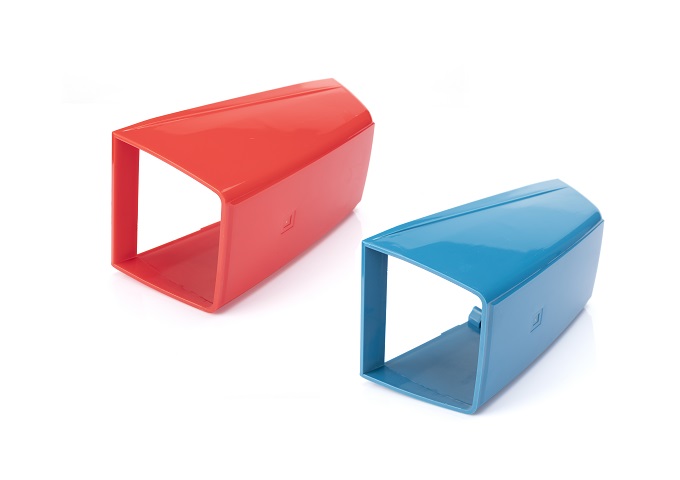
Precision injection molding is a specialized process within the broader field of plastic injection molding that focuses on producing parts with very tight dimensional tolerances, often within ±0.05 mm or even finer. This process is essential when manufacturing components for industries such as medical devices, electronics, automotive, and aerospace, where small deviations can compromise performance.
Key characteristics of precision injection molding include:
High repeatability
Fine surface finishes
Accurate geometries
Minimal post-processing
Unlike conventional plastic molding, precision molding emphasizes meticulous control over every stage of production, from mold design to part ejection.
Understanding how does an injection molding machine work is fundamental to grasping precision injection molding.
The basic process involves several stages:
Material Feeding: Plastic pellets, silicone, or other polymer materials are fed into the hopper.
Melting: The material is heated in the barrel until it reaches a molten state suitable for injection.
Injection: The molten material is injected into the mold cavity under high pressure.
Cooling: The mold, often water-cooled, solidifies the part in precise dimensions.
Ejection: The solidified part is ejected, ready for inspection or secondary operations.
Precision injection molding machines feature advanced controls for temperature, injection speed, pressure, and cooling, ensuring consistent quality for each part.
Precision injection molding can accommodate a wide range of materials, including:
Engineering plastics: ABS, polycarbonate, PEEK, nylon, polypropylene
Silicones: For silicone injection molding, often used in medical or food-grade components
High-performance polymers: Used in automotive and aerospace applications
Material selection is critical for plastic mold manufacturers to achieve the desired mechanical properties, surface finish, and dimensional stability.
Precision injection molding offers several advantages over standard plastic molding:
Tight tolerances ensure that parts fit together correctly in assemblies, reducing the need for secondary machining or adjustments.
Each part is virtually identical, making this process ideal for injection molding services requiring high-volume production with zero-defect rates.
Precision injection molding allows for intricate designs, thin walls, fine ribs, and small holes without compromising part integrity.
The process produces parts with smooth surfaces, reducing finishing work and improving aesthetics, which is important in electronics and consumer products.
The process supports both rigid plastics and flexible materials, including silicone injection molding, expanding its application range.
Custom injection molding focuses on producing parts tailored to specific client requirements. This includes mold design, material selection, and post-processing, ensuring parts meet exact specifications.
Rapid injection molding combines precision with speed, allowing fast prototyping and small-volume production. It is ideal for testing designs before committing to full-scale manufacturing.
Prototype injection molding creates functional parts for testing, validation, and design verification. This step helps designers optimize their components for mass production.
Silicone injection molding is a specialized process for flexible materials, commonly used in medical, food, and consumer products. Silicone parts require precise control over temperature and injection speed to maintain accuracy.
The mold is the most critical component in plastic injection molding. Features of a high-precision mold include:
Tight tolerances: Ensures part dimensions remain consistent
High-quality surface finish: Provides smooth parts without defects
Cooling channels: Maintain uniform mold temperature for consistent results
Durable materials: Tool steels or hardened alloys for long-lasting molds
Plastic mold manufacturers often use advanced techniques like CNC Machining, EDM (Electrical Discharge Machining), and laser finishing to achieve precision levels required for high-quality production.
Precision molding requires rigorous quality control, including:
Dimensional inspection: Using calipers, micrometers, and CMMs (Coordinate Measuring Machines)
Material testing: Ensuring plastic properties meet specifications
Visual inspection: Checking for surface defects, warping, or flash
High-quality injection molding services integrate these checks to guarantee that each part meets customer expectations.
Precision injection molding is used across numerous industries:
Medical Devices: Surgical instruments, diagnostic components, and drug delivery systems
Electronics: Connectors, housings, switches, and sensors
Automotive: Sensors, clips, and precision interior components
Consumer Products: Small parts requiring tight tolerances and high surface quality
The ability to produce consistent, high-accuracy parts makes this process indispensable for modern manufacturing.
While highly effective, precision injection molding presents challenges:
High initial mold cost: Creating custom molds for metal or plastic requires significant investment
Material selection: Not all plastics can achieve the same precision levels
Process control: Maintaining consistent temperature, pressure, and cooling is critical
Maintenance: Molds must be carefully maintained to preserve accuracy over time
Despite these challenges, the advantages often outweigh the costs, especially for high-performance applications.
Modern trends in plastic injection molding include:
Automation and robotics: For faster cycle times and improved repeatability
Advanced simulation software: To optimize mold design and material flow
Additive manufacturing integration: Combining CNC and 3D printing for faster mold prototyping
Sustainable materials: Biodegradable plastics and energy-efficient processing
These innovations expand the capabilities of custom injection molding and improve efficiency and quality.
Precision injection molding is a cornerstone of modern manufacturing, enabling the production of high-quality, high-accuracy plastic and silicone parts. Understanding what is precision injection molding, how does an injection molding machine work, and the benefits of specialized processes like rapid injection molding, prototype injection molding, and silicone injection molding is essential for engineers, designers, and manufacturers.
Whether working with a plastic mold manufacturer for high-volume production or a small-scale prototyping project, precision injection molding ensures consistent performance, tight tolerances, and superior surface quality. Its applications span medical, automotive, electronics, and consumer industries, proving its versatility and importance in today’s manufacturing landscape

Fair Shine industrial (Hong Kong) Co., Limited
To provide customers with the most comprehensive precision mold parts solutions.
+86 189 2682 6341
Block 1, No. 12, Wusong 4th Street, Yuwu Industrial Zone, Dongcheng District, Dongguan, Guangdong, China
Copyright © 2026 Dongguan Huixiang Mold Technology Co., Ltd all rights reservrd.
Technical support: HuaShang