


Fair Shine industrial (Hong Kong) Co., Limited
To provide customers with the most comprehensive precision mold parts solutions.

2026-07-09 11:29:35
In modern manufacturing,molds play a critical role in creating high-quality products with consistent shapes,accurate dimensions,and efficient production cycles.Among the most widely used molding technologies,stamping molds and injection molds are two popular Solutions for different manufacturing needs.Although both are designed to produce large quantities of components,they work in completely different ways and are suitable for different materials and applications.
Understanding the differences between stamping molds and injection molds can help manufacturers choose the right production method,reduce costs,and improve product quality.
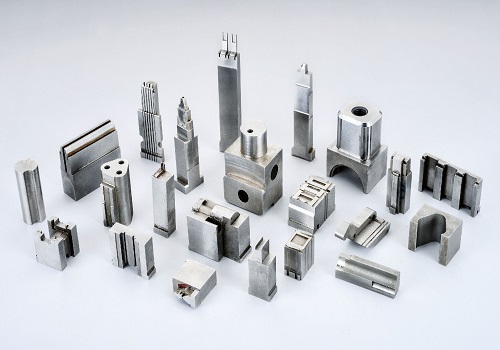
A stamping mold is a specialized tool used to shape metal sheets or other materials through pressure.During the stamping process,a machine applies force to press the material between the upper and lower sections of the mold,creating the desired shape through cutting,bending,punching,or forming.
Stamping molds are commonly used for high-volume production because they offer excellent repeatability,fast processing speed,and high dimensional accuracy.
Key features of stamping molds include:
High production efficiency
Excellent strength and durability
Suitable for metal forming applications
Low cost per unit in mass production
High precision for complex components
Industries such as automotive manufacturing,electronics,appliances,aerospace,and hardware production rely heavily on stamping molds to manufacture metal parts.
An injection mold is a tool used to produce plastic parts by injecting melted plastic material into a specially designed mold cavity.After cooling and solidifying,the plastic component takes the shape of the mold.
Injection Molding is widely used for producing complex plastic products with detailed structures,smooth surfaces,and various shapes.
Common advantages of injection molds include:
Ability to create complicated geometries
Excellent surface finish
Suitable for plastic materials
High consistency in large-scale production
Reduced need for additional processing
Injection molds are commonly found in industries such as consumer electronics,medical equipment,packaging,toys,automotive interiors,and household products.
The biggest difference between these two technologies is the manufacturing process.
A stamping mold uses mechanical force to transform solid materials,mainly metal sheets,into specific shapes.The process does not require melting the material.
An injection mold,on the other hand,requires heating plastic materials until they become liquid.The melted material is then injected into the mold cavity and cooled to form the final product.
Simply put:
Stamping mold=shaping solid materials through pressure
Injection mold=shaping melted materials through cooling and solidification
Material selection is one of the most important factors when choosing between stamping molds and injection molds.
Stamping molds are mainly used for:
Stainless steel
Aluminum
Copper
Carbon steel
Metal alloys
Because metal materials are strong and durable,stamping processes are ideal for producing structural components that require high strength.
Injection molds are mainly used for:
ABS plastic
Polypropylene(PP)
Polycarbonate(PC)
Nylon
PVC
Plastic Injection Molding is preferred when lightweight,flexible,and complex-shaped products are required.
For large-volume manufacturing,both stamping molds and injection molds can significantly reduce production costs.However,their cost structures are different.
Stamping molds usually have lower operating costs because the process is faster and requires less energy.They are especially cost-effective for producing large quantities of identical metal parts.
Injection molds often require higher initial investment due to complex mold designs and precision manufacturing.However,they become economical when producing large numbers of plastic components.
Choosing the right technology depends on factors such as:
Product quantity
Material requirements
Design complexity
Surface requirements
Production budget
Stamping molds are widely used in:
Automotive body parts
Electrical connectors
Metal brackets
Hardware components
Appliance parts
Precision electronic components
For example,manufacturers producing metal housings or structural parts often choose precision stamping molds because they provide excellent strength and accuracy.
Injection molds are commonly used for:
Plastic housings
Medical devices
Consumer electronics parts
Packaging products
Toys and daily-use products
When products require detailed designs,curves,or integrated structures,injection molding is usually the better choice.
Besides industrial manufacturing,stamping technology is also used in decorative applications.For example,in construction projects,specially designed concrete mold stamp products help create textured concrete surfaces with patterns resembling brick,stone,or wood.
Stamped concrete molds,concrete stamp molds,and cement stamp molds allow contractors to produce decorative flooring,patios,driveways,and landscape surfaces efficiently.Similar to industrial stamping molds,these tools rely on accurate patterns and durable structures to achieve consistent results.
When deciding between a stamping mold and an injection mold,manufacturers should consider:
Choose stamping molds for metal materials.
Choose injection molds for plastic products.
Choose stamping for strong and thin metal components.
Choose injection molding for complex three-dimensional shapes.
Both methods work well for mass production,but the ideal choice depends on product requirements.
Metal stamping provides higher mechanical strength.
Injection molding provides More design flexibility.
A:It depends on the product and production volume.Stamping molds usually have lower operating costs,while injection molds may offer better value for complex plastic products.
A:No.Stamping molds and injection molds have different structures and working principles,so they are designed for different manufacturing processes.
A:Both are suitable for mass production.The best option depends on material,design complexity,and product requirements.
A:Look for manufacturers with strong engineering capabilities,advanced equipment,quality control systems,and experience in custom mold production.

Fair Shine industrial (Hong Kong) Co., Limited
To provide customers with the most comprehensive precision mold parts solutions.
+86 189 2682 6341
Block 1, No. 12, Wusong 4th Street, Yuwu Industrial Zone, Dongcheng District, Dongguan, Guangdong, China
Copyright © 2026 Dongguan Huixiang Mold Technology Co., Ltd all rights reservrd.
Technical support: HuaShang