


Fair Shine industrial (Hong Kong) Co., Limited
To provide customers with the most comprehensive precision mold parts solutions.

2026-07-16 11:40:52
A Die Casting mold is a precision-engineered tool used to manufacture metal parts through the Die Casting process.It shapes molten metal into specific designs by using high pressure to force liquid metal into a specially designed mold cavity.
Unlike traditional casting methods,die casting molds allow manufacturers to produce large quantities of metal components with excellent dimensional accuracy,smooth surface finishes,and consistent quality.
Die casting molds are widely used in industries such as automotive,electronics,machinery,aerospace,and consumer products because they support efficient mass production of complex metal parts.
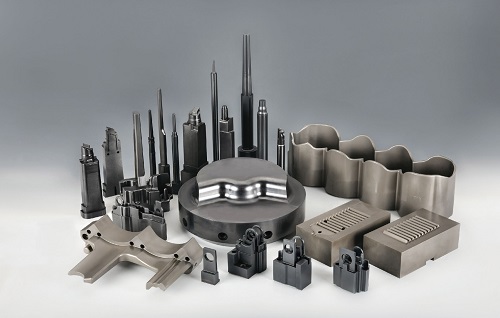
The working principle of a die casting mold involves injecting molten metal into a mold cavity under high pressure.The mold temporarily contains the liquid metal until it cools and solidifies into the desired shape.
The basic process includes four main steps:
Before casting begins,the die casting mold is installed into the die casting machine.The mold usually consists of two halves:
Fixed die half
Moving die half
When closed,these two sections create a sealed cavity that defines the shape of the final component.
Metal materials such as aluminum,zinc,or magnesium are heated until they become liquid.
The molten metal is then injected into the mold cavity at high speed and pressure.
High-pressure filling allows the metal to:
Reach complex mold areas
Form thin walls
Capture detailed surface features
After injection,the molten metal cools inside the mold cavity and becomes a solid component.
A well-designed cooling system helps:
Control mold temperature
Reduce production cycle time
Improve product quality
Prevent casting defects
Once the metal part has fully solidified,the mold opens and an ejector system pushes the finished component out.
The mold is then closed again for the next production cycle.
A high-performance die casting mold contains several important components that work together to ensure accurate production.
The mold cavity is the area where molten metal takes its final shape.
Its precision directly affects:
Product dimensions
Surface quality
Overall casting accuracy
High-quality molds require advanced CNC Machining to achieve tight tolerances.
Die cast core pins are used to create internal features such as:
Holes
Channels
Internal cavities
Because core pins are exposed to high temperatures and repeated cycles,they are usually made from heat-resistant materials such as H13 tool steel or SKD61 steel.
The ejector system removes the finished casting from the mold after solidification.
It includes:
Ejector pins
Ejector plates
Return mechanisms
A properly designed ejector system prevents part damage during removal.
Cooling channels are integrated into the mold structure to regulate temperature.
Effective cooling improves:
Mold lifespan
Casting consistency
Production efficiency
Because die casting molds operate under extreme pressure and temperature conditions,they require durable materials with excellent heat resistance.
Common mold materials include:
Material Features
H13 Tool Steel Excellent thermal fatigue resistance and toughness
SKD61 Steel High hardness and wear resistance
Stainless Steel Good corrosion resistance
Tungsten Carbide Extremely high wear resistance
Among these materials,H13 and SKD61 are widely used for high-pressure aluminum and zinc die casting applications.
An aluminum die casting mold is commonly used for lightweight and durable metal components.
Applications include:
Automotive housings
Engine parts
Electronic enclosures
Mechanical components
Advantages:
Lightweight parts
Good corrosion resistance
Excellent strength-to-weight ratio
Zinc die casting molds are suitable for small and highly detailed components.
Benefits include:
Excellent dimensional accuracy
Smooth surface finish
Lower melting temperature
Common applications:
Hardware products
Connectors
Decorative parts
High pressure die casting molds are designed for fast production and complex metal parts.
They are commonly used in:
Automotive manufacturing
Electronics production
Industrial equipment
Die casting molds are essential because they allow manufacturers to produce complex metal components efficiently and consistently.
Key advantages include:
A durable die casting mold can produce thousands or even millions of identical parts,making it ideal for large-scale manufacturing.
Precision-designed molds help achieve tight dimensional tolerances and reduce additional machining requirements.
Die casting produces smooth surfaces that often require minimal post-processing.
Although initial mold development requires investment,reusable molds significantly reduce the cost per component during high-volume production.
Die casting molds are widely used in many industries.
Examples:
Transmission housings
Engine components
Structural brackets
Battery cases
Examples:
Device housings
Heat sinks
Connector components
Examples:
Machine parts
Pump components
Precision metal fittings
Selecting the right die casting mold manufacturer is important for product quality and production efficiency.
Consider the following factors:
A reliable supplier should have:
CNC Machining equipment
Mold design experience
Quality inspection systems
Professional manufacturers should provide:
Custom die casting mold design
Prototype development
Engineering support
Important quality checks include:
Dimensional inspection
Material testing
Mold trial production
A die casting mold is used to shape molten metal into precise components during the die casting manufacturing process.
The lifespan depends on mold material,casting conditions,maintenance,and production volume.High-quality molds can support hundreds of thousands of casting cycles.
Common materials include aluminum,zinc,magnesium,and copper alloys.
Yes.Manufacturers can customize mold designs,cavity structures,core pins,cooling systems,and dimensions according to product requirements.
A die casting mold uses high-pressure injection and precision tooling,while traditional casting molds usually rely on gravity or lower-pressure filling methods.

Fair Shine industrial (Hong Kong) Co., Limited
To provide customers with the most comprehensive precision mold parts solutions.
+86 189 2682 6341
Block 1, No. 12, Wusong 4th Street, Yuwu Industrial Zone, Dongcheng District, Dongguan, Guangdong, China
Copyright © 2026 Dongguan Huixiang Mold Technology Co., Ltd all rights reservrd.
Technical support: HuaShang