


Hardware Mold Parts are essential components used in various mold systems for metal stamping, plastic molding, die casting, and other industrial manufacturing processes. These components work together to guide, position, shape, cut, and form materials into specific dimensions and designs.
From punches and dies to guide pins, mold inserts, and ejector pins, each component plays an important role in maintaining mold accuracy, production efficiency, and product consistency. Selecting the right materials, dimensions, and manufacturing processes is essential for achieving reliable mold performance.
This guide explores the main types of hardware mold parts, commonly used materials, manufacturing processes, and industrial applications to help buyers and manufacturers understand how to select suitable mold components for different production requirements.
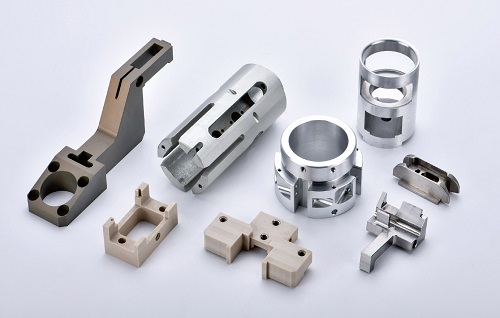
1. What Are Hardware Mold Parts?
Hardware mold parts are precision-engineered components used in mold assemblies and tooling systems. They are designed to perform specific mechanical functions during manufacturing, such as cutting, forming, positioning, guiding, and ejecting workpieces.
These components are commonly used in metal stamping dies, precision molds, automotive tooling, electronic component manufacturing, and industrial production equipment.
Depending on the mold structure and application, hardware mold parts may be manufactured according to standard specifications or customized drawings. Their dimensional accuracy, hardness, surface finish, and wear resistance directly affect mold performance and service life.
2. Common Types of Hardware Mold Parts
Hardware mold parts include various components with different structures and functions. The following are some commonly used types in industrial mold systems.
2.1 Punches
Punches are cutting or forming components used in stamping dies and other tooling systems. They apply force to metal sheets or other materials to create holes, shapes, and specific profiles.
Precision punches are often manufactured from hardened tool steel or carbide materials to withstand repeated impact, friction, and mechanical stress.
Common applications include metal stamping, punching, blanking, and precision component manufacturing.
2.2 Dies
Dies work together with punches to cut, shape, or form materials during manufacturing. They provide the required openings, cavities, or forming surfaces that determine the final workpiece geometry.
Depending on the production process, dies may be designed for blanking, piercing, bending, drawing, or other metal forming operations.
Accurate die dimensions and proper clearance between the punch and die are important for achieving consistent processing results.
2.3 Mold Inserts
Mold inserts are replaceable components installed within a mold base. They are commonly used to form specific product features, shapes, cavities, or detailed structures.
Compared with manufacturing an entire mold as one piece, replaceable inserts can make mold maintenance, modification, and repair More convenient.
Mold inserts are widely used in plastic injection molds, precision tooling, and customized industrial molds.
2.4 Guide Pins and Bushings
Guide pins and bushings are positioning and guiding components used to maintain alignment between different sections of a mold assembly.
Guide pins help control the relative movement of mold plates, while guide bushings provide a matching guiding surface. Their dimensional accuracy and surface quality help reduce misalignment and unwanted movement during operation.
2.5 Ejector Pins
Ejector pins are used to remove finished parts from a mold after the molding process. They apply controlled mechanical force to release the molded product from the cavity.
These components are commonly used in plastic injection molds and other molding systems. Their hardness, straightness, surface finish, and dimensional consistency are important for reliable operation.
2.6 Mold Cores and Cavities
Mold cores and cavities are major components responsible for forming the shape of molded products.
The cavity generally forms the external shape of a product, while the core creates internal features, holes, or hollow structures. Both components require precise machining to achieve the specified product dimensions and surface quality.
2.7 Die Springs
Die springs provide controlled force and return movement in stamping dies and other tooling assemblies. They are used in applications such as stripper plates, pressure systems, and mechanical return mechanisms.
Different spring loads, dimensions, and operating conditions should be considered when selecting suitable die springs.
3. Common Materials Used for Hardware Mold Parts
Material selection is an important factor in hardware mold parts manufacturing. Different components require different combinations of hardness, toughness, wear resistance, strength, and machinability.
Common materials include:
3.1 Tool Steel
Tool steel is widely used for punches, dies, mold inserts, and other precision tooling components. It offers a combination of hardness, strength, and wear resistance after appropriate heat treatment.
Different tool steel grades are selected according to the working conditions, material being processed, and expected production volume.
3.2 SKD11
SKD11 is a cold-work tool steel commonly used for stamping dies, punches, and wear-resistant mold components. It offers good wear resistance and dimensional stability when properly heat-treated.
It is often selected for tooling applications that involve repeated cutting, forming, and abrasive contact.
3.3 DC53
DC53 is a high-performance cold-work tool steel developed for demanding tooling applications. It offers a combination of hardness, toughness, and wear resistance, making it suitable for certain precision punches, dies, and stamping components.
Its performance depends on the heat treatment process and actual operating conditions.
3.4 SKH51 High-Speed Steel
SKH51 is a high-speed steel commonly used for punches, cutting tools, and precision stamping components. It offers good hardness and wear resistance, making it suitable for applications involving repeated cutting and mechanical contact.
3.5 Tungsten Carbide
Tungsten carbide is a hard material widely used for precision punches, dies, and wear-resistant tooling components.
Its excellent hardness and abrasion resistance make it suitable for demanding production environments, particularly when high wear resistance and long service life are required.
3.6 Stainless Steel
Stainless steel may be used for selected mold components where corrosion resistance is important. Its suitability depends on the required strength, hardness, operating environment, and specific component function.
4. Manufacturing Processes for Hardware Mold Parts
Precision hardware mold parts require suitable manufacturing processes to achieve the specified dimensions, tolerances, and surface quality.
4.1 CNC Machining
CNC Machining uses computer-controlled equipment to remove material and produce components according to engineering drawings. It is suitable for manufacturing mold inserts, precision blocks, holders, and customized mold components.
4.2 Wire EDM
Wire electrical discharge machining uses an electrically charged wire to cut conductive materials with high precision. It is particularly useful for producing complex profiles, narrow slots, and detailed shapes in hardened tool steel.
4.3 Precision Grinding
Precision grinding is used to achieve accurate dimensions, flat surfaces, and tight tolerances. It is commonly applied to punches, dies, precision plates, and other components requiring controlled surface geometry.
4.4 Heat Treatment
Heat treatment modifies the mechanical properties of mold materials through controlled heating and cooling processes. Depending on the material and application, it can improve hardness, strength, wear resistance, and dimensional stability.
4.5 Surface Finishing
Surface finishing processes help improve surface quality and functional performance. Depending on the application, finishing may include polishing, coating, and other surface treatment methods.
The appropriate process should be selected according to the component material, geometry, required tolerance, and operating conditions.
5. Applications of Hardware Mold Parts
Hardware mold parts are used in many manufacturing industries where precision tooling and repeatable production are required.
5.1 Automotive Manufacturing
Automotive manufacturing relies on stamping dies and precision tooling to produce metal brackets, structural components, connectors, and other vehicle parts.
Punches, dies, guide components, and customized mold inserts help maintain dimensional consistency during high-volume production.
5.2 Electronics Manufacturing
Electronic components often require small dimensions and precise geometries. Hardware mold parts are used in the production of metal terminals, connectors, electronic housings, and precision stamped components.
5.3 Home Appliance Manufacturing
Manufacturers of household appliances use mold components to produce metal panels, brackets, plastic housings, and functional parts. Precision tooling helps maintain consistent product dimensions across repeated production cycles.
5.4 Industrial Machinery
Industrial machinery manufacturers use customized mold components and tooling parts to produce mechanical fittings, metal structures, machine components, and specialized hardware products.
5.5 Medical Equipment Manufacturing
Selected precision mold components are used in manufacturing equipment for medical products, including plastic housings, small precision parts, and specialized molded components. Material selection and manufacturing quality must meet the specific requirements of each application.
6. How to Choose the Right Hardware Mold Parts?
Selecting suitable hardware mold parts requires consideration of the mold design, working environment, material properties, and production requirements.
Material and Hardness Requirements
Choose materials according to the working load, wear conditions, impact resistance, and required hardness. The material should be suitable for the intended production process.
Dimensional Accuracy and Tolerance
Precision mold components often require strict dimensional tolerances. Buyers should provide detailed engineering drawings and specify critical dimensions, geometric tolerances, and surface finish requirements.
Operating Conditions
Consider the production speed, processing material, mechanical stress, friction, and operating temperature. These factors influence the required component design and material selection.
Manufacturing and Quality Control
A qualified mold parts manufacturer should have suitable machining equipment, inspection instruments, and quality control procedures. Material verification, dimensional inspection, and hardness testing can help ensure that components meet project specifications.
Standard or Customized Components
Standard mold components can be suitable for common mold structures, while customized components are often required for specialized tooling designs and non-standard dimensions.
7. Custom Hardware Mold Parts Manufacturing
Different mold designs and production requirements may require customized hardware mold parts. Custom manufacturing allows components to be produced according to specific drawings, dimensions, materials, and technical requirements.
Depending on the manufacturer’s capabilities, customization may include:
Customized punches, dies, and mold inserts.
Precision Machining according to customer drawings.
Different tool steel and carbide material options.
Specified hardness and heat treatment requirements.
Precision grinding and EDM machining.
Customized dimensions, tolerances, and surface finishes.
When requesting a quotation, buyers should provide 2D drawings, 3D models, material specifications, required quantities, and any special technical requirements. This helps manufacturers evaluate the machining process and provide a more suitable production solution.
Frequently Asked Questions
What are the most common hardware mold parts?
Common hardware mold parts include punches, dies, mold inserts, guide pins, guide bushings, ejector pins, mold cores, cavities, and die springs. Each component performs a different function within a mold or tooling assembly.
What materials are commonly used for precision mold parts?
Common materials include SKD11, DC53, SKH51, other tool steels, and tungsten carbide. The appropriate material depends on the component function, working conditions, hardness requirements, and expected service life.
What is the difference between punches and dies?
Punches apply force to cut or form a material, while dies provide the corresponding cutting or forming surface. They usually work together in stamping operations to produce the required shapes and dimensions.
Can hardware mold parts be manufactured according to customer drawings?
Yes. Custom hardware mold parts can be manufactured according to customer-provided 2D drawings, 3D models, material specifications, and tolerance requirements, depending on the manufacturer's production capabilities.
How can the service life of mold parts be improved?
Suitable material selection, proper heat treatment, accurate machining, appropriate surface finishing, and regular maintenance can help improve mold part durability and reduce premature wear.
Conclusion
Hardware mold parts are essential to precision tooling and industrial manufacturing. From punches and dies to mold inserts, guide pins, and ejector pins, each component contributes to the accuracy, stability, and efficiency of the production process.
Choosing the right materials, manufacturing methods, and dimensional specifications is important for achieving reliable performance and consistent production quality.
For manufacturers and industrial buyers requiring customized tooling components, working with an experienced Hardware Mold Parts Manufacturer can help ensure that parts meet specific engineering drawings, material requirements, and application needs.
