


Material selection is one of the most important factors when manufacturing Stamped Mold Parts. The material directly affects the hardness, wear resistance, toughness, dimensional stability, service life, and overall performance of stamping die components.
Different stamping applications place different demands on mold parts. A component used for high-volume progressive stamping may require excellent wear resistance and dimensional stability, while a part used for complex forming operations may need a better balance between hardness and toughness.
Choosing the right material for Stamped Mold Parts therefore requires More than selecting the hardest available steel. The material should be matched to the stamping material, production volume, working conditions, required precision, and expected service life.
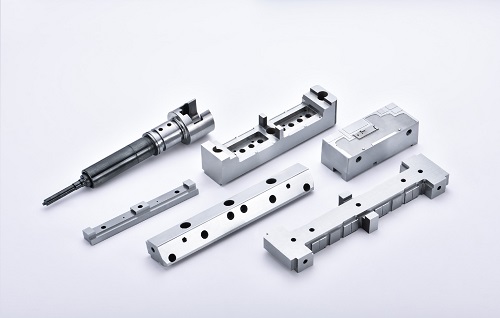
Why Is Material Selection Important for Stamped Mold Parts?
Stamping dies operate under repeated mechanical loads. During production, punches, die inserts, guide components, and other mold parts may experience impact, friction, compression, heat, and repeated cycling.
If the material is not suitable for the application, the stamping die may experience premature wear, cracking, deformation, chipping, or dimensional changes.
A properly selected material can help provide:
High wear resistance
Good hardness and strength
Suitable toughness
Excellent dimensional stability
Longer service life
Better resistance to deformation
Consistent stamping accuracy
For precision Stamping Die Parts, material selection is especially important because even small dimensional changes can affect the quality of the final stamped product.
What Factors Should Be Considered When Choosing Material?
Before selecting a material for Stamped Mold Parts, manufacturers should evaluate the actual working conditions of the mold.
1. Type of Stamping Material
The material being stamped is one of the first factors to consider. Different sheet materials create different levels of wear and forming resistance.
For example, stamping mild steel may require different die materials from applications involving stainless steel, high-strength steel, copper alloys, or aluminum alloys.
Harder or more abrasive work materials can increase wear on punches and die inserts. In these applications, materials with higher wear resistance may provide better performance.
2. Production Volume
Production volume also affects material selection.
For low-volume production, a conventional tool steel may provide a practical balance between cost and performance. For high-volume production, however, the additional cost of a premium tool material may be justified by its longer service life and reduced maintenance requirements.
High-volume progressive stamping applications generally place greater demands on the durability of punches, die inserts, and other high-wear components.
3. Required Hardness
Hardness helps a mold part resist deformation and surface wear. However, maximum hardness is not always the best solution.
A material that is extremely hard but lacks sufficient toughness may be more susceptible to cracking or chipping under impact or complex loading conditions.
Therefore, material selection should achieve an appropriate balance between hardness and toughness.
4. Wear Resistance
Wear resistance is particularly important for components that continuously contact the stamped material.
Punches, die inserts, and forming components can experience repeated friction during high-speed stamping. If wear progresses too quickly, the dimensions of the die may change and the quality of the stamped parts can gradually decrease.
For high-volume applications, a material with excellent wear resistance can help extend maintenance intervals and improve production consistency.
5. Toughness and Impact Resistance
Some stamping operations involve significant impact or sudden mechanical loads. In these applications, toughness is an important consideration.
A mold part with insufficient toughness may develop cracks or chips even when its hardness is high.
For punches and other components exposed to impact loading, manufacturers should consider the balance between hardness, toughness, and the geometry of the component.
Common Materials for Stamped Mold Parts
Different tool materials can be used for Stamped Mold Parts depending on the application. Common choices include tool steels, high-speed steels, and carbide materials.
| Material | Main Characteristics | Typical Applications |
|---|---|---|
| SKD11 | Good wear resistance, hardness, and dimensional stability | Punches, die inserts, precision stamping components |
| DC53 | High hardness with improved toughness compared with some conventional cold-work tool steels | High-performance stamping die components |
| SKH51 | High hardness and good wear resistance | High-speed punches and precision components |
| Powder High-Speed Steel | High wear resistance and good performance in demanding applications | High-volume and precision stamping |
| Tungsten Carbide | Very high hardness and excellent wear resistance | High-wear punches, inserts, and demanding applications |
The actual material grade should be selected according to the specific stamping process, component geometry, required life, and manufacturing requirements. Material properties and heat-treatment results should also be verified for the intended application.
SKD11 vs. DC53 for Stamping Mold Parts
SKD11 and DC53 are commonly considered for precision stamping applications, but they offer different performance characteristics.
SKD11 is a widely used cold-work tool steel known for its hardness, wear resistance, and dimensional stability. It can be suitable for a wide range of stamping die components.
DC53 is also designed for demanding cold-work tooling applications and can provide a useful combination of hardness and toughness. It may be considered when improved resistance to chipping or cracking is required in comparison with some conventional tool steel choices.
The better choice depends on the specific application rather than simply choosing one material as universally superior.
When Should You Consider Carbide for Stamped Mold Parts?
Tungsten carbide can be considered when extremely high wear resistance is required.
Carbide is significantly harder than conventional tool steels and can provide excellent resistance to abrasive wear. It can therefore be useful for high-volume production, difficult-to-stamp materials, and components that require extended service life.
However, carbide is also more brittle than many tool steels and may require careful consideration of the component design, loading conditions, manufacturing process, and application environment.
For this reason, carbide is not automatically the best material for every Stamping Die Part.
How Heat Treatment Affects Stamped Mold Parts
Material selection and heat treatment should be considered together. Even a suitable tool steel may not provide the required performance if the heat-treatment process is inappropriate.
Depending on the selected material and application, heat treatment can be used to achieve the required hardness and mechanical properties.
Important considerations may include:
Target hardness
Hardening process
Tempering conditions
Dimensional stability
Required toughness
Application-specific performance
For Precision Stamping Mold Parts, controlling dimensional changes during heat treatment is particularly important because the final components may require tight dimensional tolerances.
Material Selection for Different Stamping Die Components
Not every component within a stamping die needs to use exactly the same material. Different parts experience different loads and wear conditions.
Punches
Punches are directly involved in cutting or forming operations and can experience repeated impact and wear. High wear resistance and sufficient toughness are important considerations.
Die Inserts
Die inserts can experience continuous contact with the work material. Wear resistance, dimensional stability, and surface hardness can therefore be important.
Guide Pins and Guide Bushings
Guide components are responsible for maintaining alignment between different sections of the die. Their material should provide suitable wear resistance and dimensional stability for repeated movement.
Stripper Components
Stripper components may experience repeated contact with the workpiece and punch. Material selection should consider friction, wear, strength, and the specific die design.
How Does Material Choice Affect Mold Life?
Material selection has a direct influence on the potential service life of stamping mold components, but it is not the only factor.
Mold life can also be affected by:
Heat-treatment quality
Machining accuracy
Surface finish
Die alignment
Lubrication
Stamping speed
Workpiece material
Operating conditions
Maintenance practices
A premium material cannot compensate for poor machining, incorrect heat treatment, improper alignment, or unsuitable operating conditions.
For this reason, the best approach is to consider the complete manufacturing process when specifying Stamped Mold Parts.
Material Selection for High-Precision Stamping
High-precision stamping requires particularly careful material selection because the mold components must maintain their dimensions throughout repeated production cycles.
For precision applications, manufacturers may consider tool steels or carbide materials with suitable hardness, wear resistance, toughness, and dimensional stability.
Precision Machining processes such as grinding, wire EDM, and electrical discharge machining may also be used to achieve the required component geometry and tolerances.
The final material and manufacturing process should be determined based on the required precision, component size, geometry, production volume, and application.
Questions to Ask a Stamped Mold Parts Manufacturer
When sourcing Stamped Mold Parts, buyers should provide as much application information as possible. This allows the manufacturer to recommend a suitable material and manufacturing process.
Useful information includes:
Part drawings or 3D models
Required dimensions and tolerances
Stamping material
Material thickness
Expected production volume
Required mold life
Stamping speed
Required surface finish
Heat-treatment requirements
Special coating requirements
An experienced Stamped Mold Parts Manufacturer can evaluate these requirements and recommend an appropriate material rather than relying on a one-size-fits-all solution.
FAQs
What is the best material for stamped mold parts?
There is no single material that is best for every stamping application. Tool steels such as SKD11 and DC53, high-speed steels, powder metallurgy steels, and tungsten carbide can all be considered depending on wear, impact, precision, production volume, and service-life requirements.
Is harder material always better for stamping die parts?
No. Excessive hardness can reduce toughness and increase the risk of cracking or chipping under certain loading conditions. The material should provide an appropriate balance between hardness, wear resistance, and toughness.
When should I use carbide for stamping mold parts?
Carbide can be considered for applications requiring very high wear resistance, particularly high-volume production or applications involving difficult-to-stamp materials. The component design and loading conditions should also be evaluated because carbide is relatively brittle.
Does heat treatment affect stamping mold life?
Yes. Heat treatment can significantly affect hardness, toughness, wear resistance, and dimensional stability. The heat-treatment process should be matched to the selected material and the requirements of the stamping application.
Can stamped mold parts be customized?
Yes. Precision stamping mold parts can be manufactured according to customer drawings, 3D models, dimensions, tolerances, material requirements, heat-treatment specifications, and surface-treatment requirements.
Choosing the right material is essential for achieving reliable performance and long service life in Stamped Mold Parts. The decision should consider the stamping material, production volume, required hardness, wear resistance, toughness, precision, operating conditions, and expected mold life.
Common materials such as SKD11, DC53, SKH51, powder high-speed steels, and tungsten carbide each have different advantages. The most suitable choice depends on the specific component and stamping application.
For high-precision or high-volume production, it is recommended to work with an experienced Stamped Mold Parts Manufacturer that can evaluate material selection, heat treatment, Precision Machining, and quality requirements as a complete solution.
